BREAKING NEWS

Tuesday, January 31, 2017

Unit 6 Reflection

This Unit in our Biology class was all about biotechnology. This unit was probably the best unit we've done this year, and by far, the one I found the most fun. It was particularly interesting because of the rapid developments of biotechnology currently happening around the world. For example, in an article I read for one of our assignments, I learned that a company called Pembient is attempting to help stop animal trafficking - starting with one of the most lucrative poaching markets, especially in Asia - Rhino Horns. The article explained that rhino horns contain the exact same materials as the hair fibers and nails of humans, and thus Pembient is creating genetically identical duplicates of these rhino horns. These duplicates come in at around 20 percent of the cost, with higher quality, and less risk of transmitted disease, and thus will take the poachers out of business extremely quickly. Furthermore, this new rhino horn made by Pembient, is in large supply, and thus Pembient is teaming up with beer and other alcohol companies to use these genetically identical rhino horns to make hangover cures. 

We started of our unit by learning the basics of biotechnology. Biotech in is simplest form is just the manipulation of living things, including their cells, tissues or organs, to benefit humankind. Biotech generally focuses on the understanding of genetics, proteomics, and genomics. The 4 main applications, or domains, of biotechnology are industrial and environmental biotechnology, medical and pharmaceutical biotech, agricultural biotech, and diagnostic biotech. 

We continued to learn about the technologies of biotechnology, such as the polymerase chain reaction, or PCR, gel electrophoresis, and sequencing. PCR is a procedure to amplify a specific region of DNA, and it yields millions of copies of a sequence. Gel electrophoresis is a method using electricity to separate DNA fragments based on length. Larger pieces travel slower than smaller pieces through the gel - and after using a known fragment length as a ruler, we can determine the exact length of the unknown fragments. The last main tech used in Biotech, is sequencing, which is used to determine the exact sequence, or order, of a given DNA strand. Each copy of the sequence is one base longer and contains a florescent dye attached to it. 

Next, and probably most importantly we learned about recombinant DNA - which is basically inserting DNA of one organism into DNA of another organism and is often called genetic engineering. The result of recombinant DNA is a transgenic organism or GMO. Restriction enzymes are an essential part of any recombinant DNA - restriction enzymes are enzymes that cut DNA whenever it reads a specific sequence. 

The last main ideas we learned in this unit was about bioethics - something that has really come into the limelight over the last decade - with technology rapidly advancing. There will always be two sides of any arguments, and this vodcast helped me understand which path to take, by using my values and morals to make these decisions. In the vodcast, we learned a mature, easy way to handle these sorts of bioethical decisions, and just ethical decisions in general. The first step is to clarify the values at hand pertaining to the ethical dilemma, then you must identify the problem or issue and why it is a problem or issue. Once doing this, you move on to the crucial step of exploring all alternatives and other solutions. Once you complete that step, and are not able to find a better alternative, you must identify the pros and cons of adopting to the solution, or each of the multiple solutions.

We did multiple labs in this unit, my favorite probably being the pGLO lab. Find a pic from the lab below: 


Another one of the labs that we did in this unit, was the candy electrophoresis lab, in which we got DNA fragments from different candies and ran them through gel to compare their lengths:


I learned a lot from the 2 labs pictures above, not only content and concept wise, but also in another way. I learned that I must follow directions carefully, especially in high level labs. In the candy electrophoresis lab, I was forced to check the directions after every step, because of the complexity of the project. In my unit 5 reflection, which can be found here, I vowed to improve my group work habits, and to try to become a better group mate, helping people out whenever they do not understand something, as well as making sure that our entire group is constantly on the same page. I feel that this semester, has been much better for me in this regard, as my group has been able to finish labs constantly working together in an amazing way. We could all make sure that each other had the right idea in mind, and any confusion was swiftly solved and our group would not move on, even if one of us had a shadow of a doubt about the next step.

This brings me to my strengths and weaknesses of this unit. I feel like my main strength in this unit was me and my group's success and understanding of all the lab content. We could flawlessly work together with rarely any disagreements, and we were all able to come out with a pure understanding of the concepts, something that I could not say for previous units, or previous groups. Just minor changes in my group dynamic, really helped solve many of the problems I had misunderstandings from in previous units - it just shows you how important the people you associate with yourself are - the adage goes, "A man is only as good as the company he keeps."

My main weakness in this vodcast, in my opinion was interpretation of data and understanding of some lab questions. Especially in the pGLO lab I misunderstood one of the blog questions about bacteria, confusing during what time the question was asked about, and I received a completely different answer than those of my group mates. I also at first found the arabinose and ampicillin a bit confusing and hard to distinguish between what does what, and to what extent, however, at the end of the unit I could clear up all my questions and make sure that I go into the unit test with an exceptional understanding of all the concepts.

I really wanted to learn more about current biotech developments and what type of technology we could see soon. How close are we to genetically modifying people? How close are we to making sure that no one will ever get disease? Furthermore, I wanted to have a bioethical debate about some of these questions and about some of the current uses of biotechnology in our world. For example, we could debate whether removing disease for everyone in the world is a good thing, or is it a bad thing because it messes with the natural selection of our world.  

Earlier this semester, I made a News Years Goals post, talking about the two main goals that I wanted to strive toward accomplishing over this semester. My first goal being to better improve my time management, and I have seen a drastic increase over the past month. I organized all my activities into one calendar, and I am now able to see whenever a conflict presents itself and make sure to plan with all parties involved well in advance. I have been able to juggle, speech and debate, mock trial, basketball, boy scouts and schoolwork, primarily because of my new time management approach.

My second main goal for this year was wot more effectively improve my studying habits for assessments by learning what type of studying work for me and better implementing them into by regular studying routine. I have started to make progress to this goal by using the VARK questionnaire as well as other platforms to find out that I am a visual and reading learner and thus I have really improved my test scores. Last semester, in some of my classes, my test scores were the category pulling my overall grade down, and this semester, because of the changes I made, I feel as if the test scores category is the one that is holding my grades together. I hope both these tends continues and stay tuned for more updates in future blog posts.


Sunday, January 29, 2017

pGLO Lab Write Up

pGLO Observations , Data Recording & Analysis


1. Obtain your team plates. Observe your set of “+pGLO” plates under room light and with UV light. Record numbers of colonies and color of colonies. Fill in the table below.

Plate
Number of Colonies
Color of Colonies under Translucent Room Light
Color of Colonies under UV Light
- pGLO LB
1 large colony
Gray
Gray
- pGLO LB/amp
0
N/A
N/A
+ pGLO LB/amp
Approximately 80
White
White
+ pGLO LB/amp/ara
Approximately 50
White
Green


2.  What two new traits do your transformed bacteria have?

Our new, transformed bacteria, are now resistant to ampicillin, and they glow green (as shown in the picture above) in the prescence of arabinose sugars.

3.  Estimate how many bacteria were in the 100 uL of bacteria that you spread on each plate. Explain your logic.

An Escherichia coli cell (a single bacteria) has a volume of approximately 1 micrometer cubed. And there are 1,000,000,000 (1e9) cubic micrometers (e-coli cells) in one micro litter. Thus, if the plate is 100 micro liters, there are 1e9 * 100 bacteria on the plate. 

There arer 100,000,000,000 - 100 trillion bacteria in the 100 micro liters on the plate.  

4.  What is the role of arabinose in the plates?

The arabinose is a sugar that triggers a fluroscent green dye in the bacteria that makes the bacteria glow green.

5.  List and briefly explain three current uses for GFP (green fluorescent protein) in research or applied science.

Green fluorescent protein can be used to make transgenic pets. For example, in a french laboratory, Alba, a green-fluorescent rabbit was created using GFP.  This could be used for to save animals, like rats, by making them easier to see, on roads and freeways. 

GFP can also be sued for macro-photography. For example, the spread of virus infections can be tracked by using GFP.  This could help us stop contagious diseases from spreading.

GFP can also serve as a reporter gene, which attaches to a sequence of another gene. GFP can be heritable, and thus allowing for long term studies.

6.  Give an example of another application of genetic engineering.

One example of genetic engineering is how dragonflies are currently being genetically engineered to become cybernetic drones, for surveillance. This could be really helpful for intelligence gathering operations, and it also has other uses.


Friday, January 20, 2017

Candy Electrophoresis Labs

When we analyzed our results, some of our experimental samples contained dyes that did not match the four reference dyes. For example, some of the dye bands, almost all of them, were a different size than any other of the reference bands. Additionally, the green color band was a different color than any of the reference bands. Our green color band also split into two, a blue and a yellow. However, all the dyes moved in the right direction. The green dye was the only one that had these abnormalities.

Betanin and Fast Green, would be the ones that would migrate similarly to the dyes that we examined in this lab, because they have overall negative charges unlike the carminic acid and citrus red 2.

Dog food manufacturers would be likely to put artificial food colors in dog food, because the artificially colored dog food would be more likely to sell to consumers, and because the color might affect the way dogs think about the food, the way it affects humans.

Artificial colors are usually preferable to natural food colors, because they make food look more appealing to consumers.

Two of the factors that contributed to the distance the colored dye solutions migrated, were size, and the voltage of the gel system.

The electrical current moved the dyes through the gel.

One side of the gel was positively charged and one side was negatively, which caused the molecules to separate according to their size. The dyes were negative, so they moved to the positive side. The speed was directly affected by their size.

If I used gel electrophoresis on molecules with 600, 1000, 2000, and 5000 daltons, I would expect the molecules which weighed more, would not move as far as those that were lighter. This would happen because the heavier molecules would be larger, and move slower through the gel electrophoresis process.


Wednesday, January 11, 2017

New Years Goals Assignment

This year, I have two main goals in mind, to accomplish, to better improve my growth as a student and as a person overall.

1. I will better improve my time management

Constantly last year, I had to juggle activities without a good schedule and understanding of when I had to do what. This caused me tons of confusion, especially in regards to my school schedule. I sometimes had to tell the teacher in the morning that I would have to leave early from class that same day. This caused me to end up spending more time completing things that would have been so much easier if I had managed my time and understood my schedule properly.

Action Plan: This year, I will implement a good schedule in my life, and make sure that all my activities are stored on that schedule. I will make sure that if there are any overlaps between multiple activities or school, that I will plan what to do with all parties involved, multiple weeks in advance. I will also try to better manage my time, by setting a time limit for breaks and other non-essential activities. I will be sure to keep by my schedule and make sure I can manage my time

2. I will study more effectively

Last year, my study habits, were all over the place, none of them being very good in terms of studying for tests. In most classes, my "test" category was my worst grade. This year I will try and improve my study habits by understanding what works best for my and implementing that understanding into my studying routine when I am studying for an assessment or exam.

Action Plan: I will create a list of what type of studying worked best for me last semester, and will implement that into a "studying routine" for this semester. Whenever I have an exam or test coming up, I will make sure to start preparing more than 1 week in advance, and use my routine effectively.

I feel by implementing these two goals in my life, I will have a much smoother second semester, and will grow much more as a person.

Wednesday, December 14, 2016

Unit 5 Reflection

In this unit, we learned about walking the dogma - the basics of protein synthesis, the process in which DNA becomes a protein. We did multiple labs that helped us understand the essentials of this unit, including DNA structure and function, DNA replication, and Gene expression and regulation. 

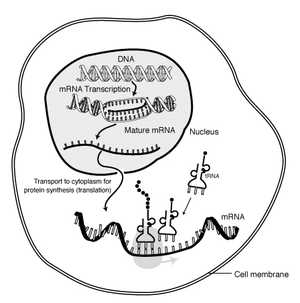
Protein synthesis has many steps. First, a copy of the DNA (deoxyribonucleic acid) is made in a process called transcription, then the copy is used to make a protein, in translation. Proteins are essential to life. The first step of translation is for a section of DNA, known as a gene, to be copied by an enzyme, in the nucleus. The copy is called messenger RNA, often abbreviated as mRNA. RNA has a few main differences form DNA: It is only single stranded, and the base uracil replaces thymine. 

After the copy is made, the mRNA leaves the nucleus and travels to the cytoplasm. Then, translation beings - the mRNA bonds with a ribosome, which will make a protein. The ribosome reads the first three bases called a codon, and determines which amino acid corresponds with that sequence. Each amino acid that is determined by the codon is read by the ribosome. Amino acids are bonded together and when the mRNA is done being translated, the amino acid chain fold up to become a protein. 

The gene expression and regulation lesson was particularly hard for me, but it was the one that I found the most interesting. The basic questions of that unit was: Why do genes appear in the correct places and at the correct times? Why don't we have eyes on our feet and toes on ours heads? And the answer was gene expression and regulation. 

Gene expression is the process of a gene being used to produce a gene product of the phenotype, basically what gene is expressed in the person. Gene regulation is a mechanism used by cells to increase or decrease the expression of a certain gene.

Another essential concept in this unit was Mutations. Although the connotation of the word mutation notes otherwise, mutations are generally very small and can have little to no effect. Is biology a mutation is a change in the DNA code. Mutations are happening almost constantly in our body. There are two main types of mutations - substitution and frameshift mutations. Substitution is when one nucleotide is substituted for another. There are two types of frameshift mutations - insertion and deletion. Insertion is when an extra base is put in and deletion is when a base is taken out.

The effect of the mutation is truly determined by where the mutation is placed. Suppose a harmful mutation to create a STOP amino acid, is placed at the front of the amino acid sequence - then the harms would be devastating. But, if the same mutation is placed near the end, then the amino acid sequence is still changed, but on a much smaller scale, thus it would not be that harmful.

One of my strengths in this unit were the labs - They really helped em visualize and understand the processes. We did a DNA extraction lab as well as a protein synthesis lab, among other things. These labs allowed me to get a full understanding of the concepts. The process of doing the lab, whether the product came out good or not, helps me understand concepts much better than reading or watching a vodcast.

One of my weaknesses in this unit were the vodcasts. Some of the vodcasts were hard to fully understand, but I was able to ask questions to my group and do the labs to make up for it. The vodcasts were especially hard because diagrams were confusing. I was not able to follow some of the diagrams, but when we did them on the board in class, I got the concepts.

Overall my growth as a learner in this unit has become tremendous, mainly because of a VARK questionnaire that I took at the end of my last unit. It told me that I was a better visual learner, and I have always known that I always understanding best when actually doing something. I feel that I have really learned what helps me understand certain concepts and how I should study in the future for science, or for any other subject. This will help me throughout my years of learning, especially as finals week comes nearer.

This unit has also taught me about how to react well to setbacks. During the DNA extraction lab, at first, I was not able to extract DNA properly, due to a mistake in our procedure. But instead of getting mad at myself, I kept my head held high and redid the lab in the correct way. I was able to finish the lab before class ended and thus, I learned how to recover form a small setback in a lab.

This unit also really helped me learn how to collaborate with others in my group. During most of my previous units I understood most of the vodcasts and there was no need, really, to discuss properly with my group about it. But in this unit, since I did not understand the vodcasts completely, I needed to collobarate with my group to make sure I got the concepts down.

Image result for substitution mutations


Monday, December 12, 2016

Protein Synthesis Lab

In this lab, we asked the questions, "How does the body produce proteins and What kinds of mutations cause the greatest damage to the structure of a protein?" To answer these questions, we followed the steps of protein synthesis, throughout transcription and translation.

Protein production can be sorted into two main steps, with multiple substeps. First, a copy of the DNA (deoxyribonucleic acid) is made in a process called transcription, then the copy is used to make a protein, in translation. Proteins are essential to life. The first step of translation is for a section of DNA, known as a gene, to be copied by an enzyme, in the nucleus. The copy is called messenger RNA, often abbreviated as mRNA. RNA has a few main differences form DNA: It is only single stranded, and the base uracil replaces thymine. After the copy is made, the mRNA leaves the nucleus and travels to the cytoplasm. Then, translation beings - the mRNA bonds with a ribosome, which will make a protein. The ribosome reads the first three bases called a codon, and determines which amino acid corresponds with that sequence. Each amino acid that is determined by the codon is read by the ribosome. Amino acids are bonded together and when the mRNA is done being translated, the amino acid chain fold up to become a protein.


"Protein Biosynthesis." Wikipedia. Wikimedia Foundation, n.d. Web. 12 Dec. 2016. <https://en.wikipedia.org/wiki/Protein_biosynthesis>.

Of the mutations that we tested in this lab, I was able to conclude that each mutation could be nearly as harmful as every other mutation, depending on of the situation, the code, and when the mutations occur. We tested three types of mutations - substitution, insertion and deletion. The effect that substitution caused varied - only being extremely harmful when placed in a certain position. Otherwise, substitution is generally harmless. Insertion and deletion followed a similar pattern. When put near the start of the sequence, the change did quite a bit of damage, but when placed at the end, not much damage occurred.
substitution


"What Types of Mutation Are There?" Facts. The Public Engagement Team at the Wellcome Genome Campus, 25 Jan. 2016. Web. 12 Dec. 2016. <http://www.yourgenome.org/facts/what-types-of-mutation-are-there>.

When I chose my mutation I chose to replace the first G with the First T, as I wanted to see what happened if one of the early letters was changed. What ended up happening was that, the stop codon (UAA) was the second amino acid in the sequence, after MET, the start codon. This would have a devastating effect, especially if the protein was important, as it would not be able to make the protein. This shows why the place that the mutation is located can have a really big effect. Earlier in the lab we did a mutation at a different place in the same sequence and there was not a single effect on the amino acid sequence.
Image result for mutation

"What Types of Mutation Are There?" Facts. The Public Engagement Team at the Wellcome Genome Campus, 25 Jan. 2016. Web. 12 Dec. 2016. <http://www.yourgenome.org/facts/what-types-of-mutation-are-there>.

Because proteins are so essential to life as they play a part in almost every activity we do, mutations can sometimes be extremely harmful, especially if it greatly alters the amino acid sequence formed by the mRNA sequence. But it is also important to note that mutations happen often on a daily basis, and that most mutations are not as harmful. One example of a disease caused by mutations is phenylketonuria, abbreviate PKU. PKU is an incurable, chronic disease, that although rare, can cause great damage to the body. It is a birth defect that causes an amino acid called phenylalaline to build up in the body, which can lead to brain damage, intellectual disabilities, behavioral symptoms or seizures. PKU is an autosomal recessive disease caused by a mutated gene for the enzyme phenylalanine hydroxylase (PAH), which converts the amino acid phenylalanineto other essential compounds in the body.

Image result for phenylketonuria
"Phenylketonuria." U.S. National Library of Medicine. National Institutes of Health, n.d. Web. 12 Dec. 2016. <https://ghr.nlm.nih.gov/condition/phenylketonuria>.

Friday, December 2, 2016

DNA Extraction Lab

In this lab, we asked the question, "How can DNA be separated from cheek cells in order to study it?" We collected information about the three main steps of DNA extraction. Homogenization, lysis, and precipitation. We found that DNA from cheek cells could be extracted and studied if the correct steps are used in the correct order. The correct steps the proper order are as follows:
  1.  Measure 2.5mL of Gatorade into a paper cup
  2.  Scrape both sides of the inside of your checks using your teeth.
  3.  Vigorously swish in your mouth for 30 seconds.
  4.  Spit solution back into cup
  5.  Add a tiny punch of salt
  6.  Carefully poor solution into a test tube about 1/3 to 1/2 of the way up
  7.  Add 10 drops of detergent/soap.
  8.  Add 5-10 drops of your enzyme (pineapple juice)
  9.  Let sit for 5 minutes and record observations.
  10.  Tilt the tube at an angle and slowly add cold alcohol along the side of the test tube. You do not want the two layers to mix. The amount added should be about the same as the Gatorade mixture.
  11.  Collect the DNA and alcohol and carefully, with a transfer pipette, and place in a microcentrifuge tube. Do your best to only transfer DNA and Alcohol to your tube.
  12. Cover the tube with your thumb. Carefully invert 6 times. Be careful not to shake too much. You do not want soapy bubbles to form.
  13. Wait for another 5 minutes and record observations. 
Evidence from Experiment: During our first trial we switched steps 11 and 12, and thus we were not able to extract DNA, but when we did these steps in the correct order, we were able to extract DNA.

Reasoning: This evidence supports our claim, because during the first trial, which failed, the two layers, of alcohol and Gatorade, mixed and thus we were not able to separate DNA. However during the second trial which succeed we only inverted the tube after separating DNA, and thus was able to get the DNA.

Possible Error 1: The first error that we made was switching the order of the steps. Part of our lab was to put random steps in the correct order. We ended up switching steps 11 and 12, thus inverting the tube 6 times (and mixing the alcohol and Gatorade solutions), before separating the DNA. The effect of this error on the overall results was the fact that we were not able to get the DNA separate and the end of the experiment.

Possible Error 2: That was the only error we made in the experiment, but a hypothetical error could have been not adding the alcohol while the test tube was tilted. The effect of this would have been the same as the effect in PE 1, as the DNA would not separate at the end of the experiment.

This lab was done to help us understand the process of DNA Extraction, including the 3 main steps - homogenization, lysis and precipitation. I can relate this lab to the vodcast about "Your Genetic Code." The concepts from that vodcast, really helped me to do this lab, and my overall understanding of DNA was solidified through this lab process. The fact that we first messed up and then fixed our mistakes, really helped me understand some of the important concepts, like the enzymes breaking down the DNA.

From this lab, I learned the correct process of DNA extraction, and now I could extract DNA from any cell. This would be helpful if I wanted to study DNA, especially discrepancies in genetic variation, in the future as a scientist. Another outcome I learned from this lab is to slow down. At first, I though for sure that the first procedure we came up with was correct, but in hindsight, I feel like if I thought about it a bit more, I would have been able to see the mistake and correct it before we started the experiment. This teaches me to double check everything I do, and most importantly, slow down.


Copyright © 2014 Siva's Biology Blog. Designed by OddThemes | Distributed By Gooyaabi Templates